
MISSING MAINTENANCE PROCEDURES FOR CARPET AND HARD SURFACE
Ever purchase something like a car or appliance and after a month or so something starts to occur to the car that you have to take it in for service? The dealer fixes it and within a few more weeks the problem happens again. How much time have you wasted dropping the car off and/or waiting for the diagnosis and repair to be made? Same with a new appliance like a high-tech refrigerator that for whatever reason things in the freezer are not frozen and you end up having to throw costly food away because it has become unsafe to consume. So the appliance repairman comes to your home and diagnoses the issue and replaces a part. Within a month the same thing happens again and even though you don’t have to pay for the service calls, you continue to throw unsafe to consume food away and disrupt your daily life to get the appliance fixed. You yell “LEMON, I want it replaced!!!” But no, the manufacturer is not going to give you a new car or refrigerator when it can be repaired. The same holds true with new carpet or flooring, but in this case, there is nothing defective with the actual flooring product, it ALL has to do with how it was cared for since it was installed. Consumers who own carpet or hard surface floors with cleaning related issues abound throughout the country and they are upset.
In the past couple of months I have been called in to inspect carpet and floors that professionals and consumers were having difficulty cleaning and some were unable to get the floor clean enough to maintain. When I ask consumers what they use to remove spots from their carpet or to clean their floors they will often say, “I use ONLY plain water, (in an almost holier than thou, condescending tone), I don’t want any ‘harsh’ chemicals used in my home.” I am tempted at times to snap back at them and say, do you use plain water to wash your clothes? Do you use plain water to wash your dishes and pots and pans? At times like this I hold my tongue and recall the role I have.
The fact is, we use detergents (chemicals) every day, from brushing our teeth, washing our hair, medications we may take, to drinking coffee, a Coke, or orange juice, it’s all chemicals, even water itself is a chemical – H2O. Plus we use chemicals designed to clean dirty clothes and wash sticky, greasy dishes, but for some reason many people think they should use only water to remove dirt and spots from floors and carpet. Hmmmmm….
The Carpet Issue
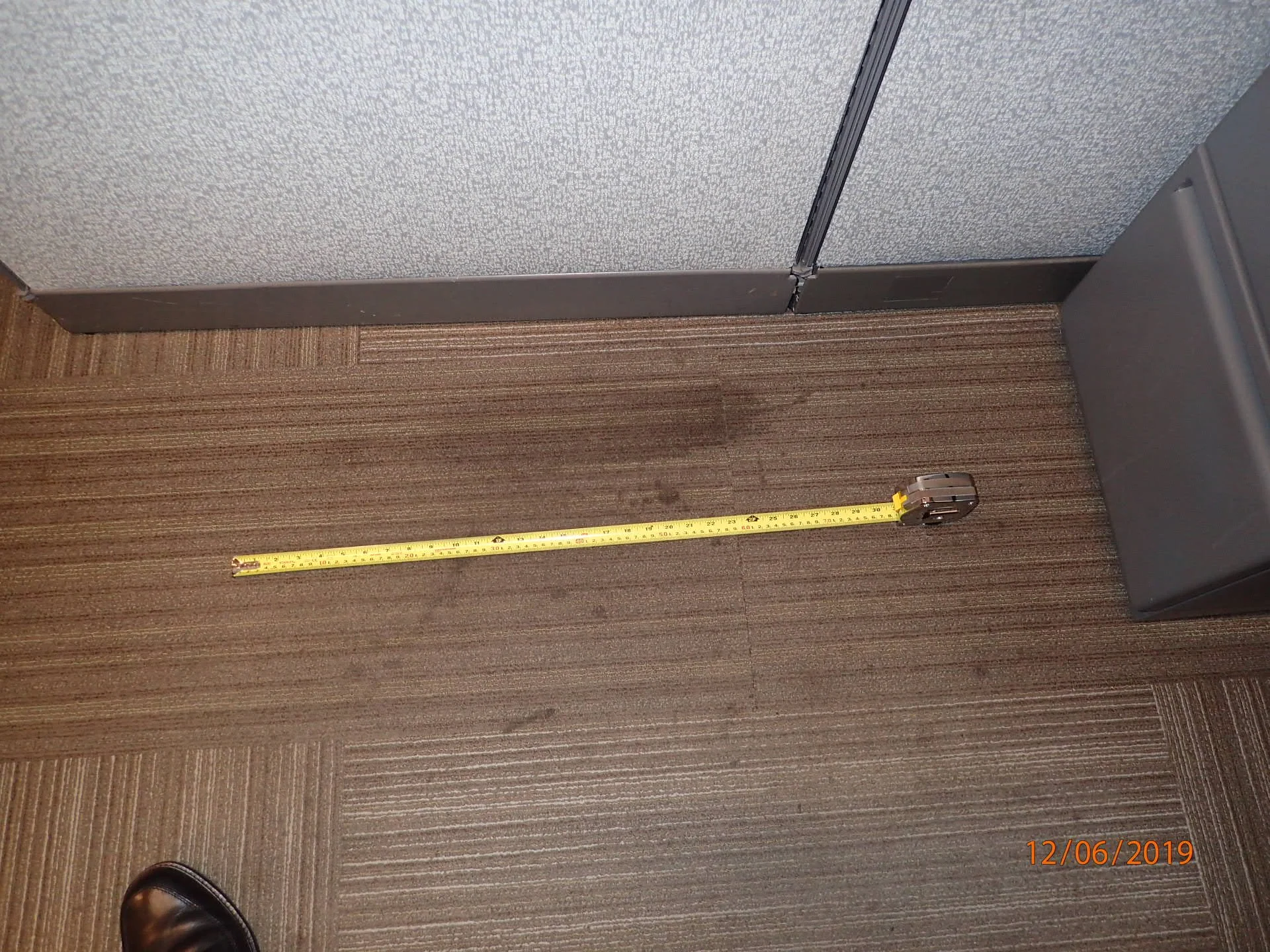
In the case of the carpet issue, the professional cleaning company was having limited success in removing basic spots from the carpet in a large commercial building. The end user who can purchase carpet directly from the manufacturer was convinced the carpet was defective, “it must not have been protected properly,” because the same issue was happening in several other buildings of theirs. The end user hired me directly to diagnose and determine if the carpet was defective or if the procedures and/or chemicals the cleaning company was using were ineffective.
One of the issues was that some spots could not be completely removed. The second and most frustrating issue was with spots that would reappear a day or two later after being removed. I got a whole history of how the carpet was being cleaned and maintained with some of the information coming from the cleaning company itself.
My field testing included using a professionally formulated, encapsulating, multipurpose spot remover. I applied the product to a spot, agitated the detergent into the carpet using a spotting tool, then blotted with absorbent towels. With one treatment the spot was removed. With the client’s permission I removed the carpet tile and inserted an uninstalled tile in its place. I took the test tile to my home office and allowed it to dry. There was another spot on the tile so in my home office I removed it using the same procedure as I did in the client’s offices. I placed the tile in a high traffic area in my home to see if the spot would wick back or if soils would be attracted to detergent residues in the cleaned area. After one week the spots were still as clean as they were the day they were removed.
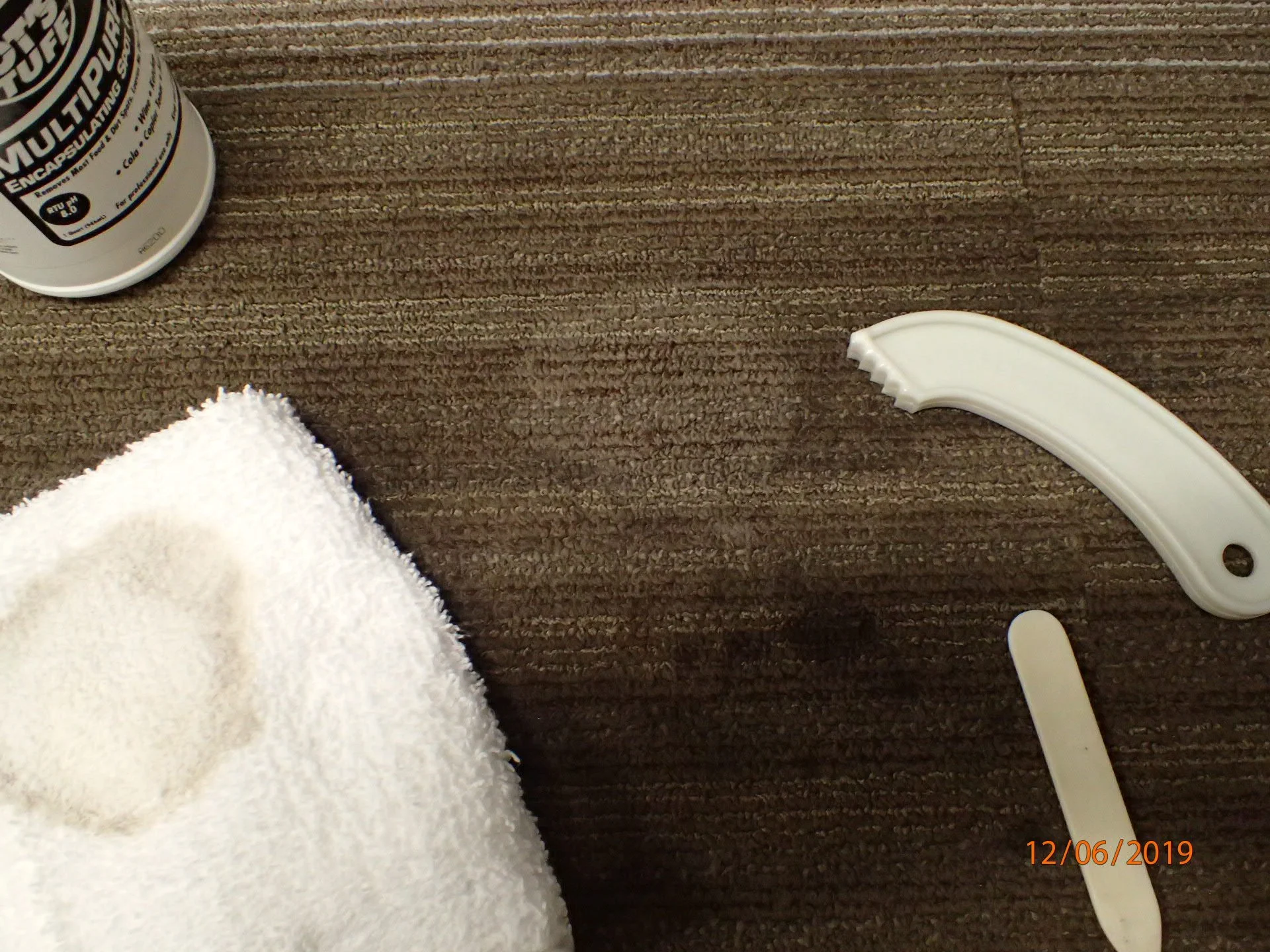
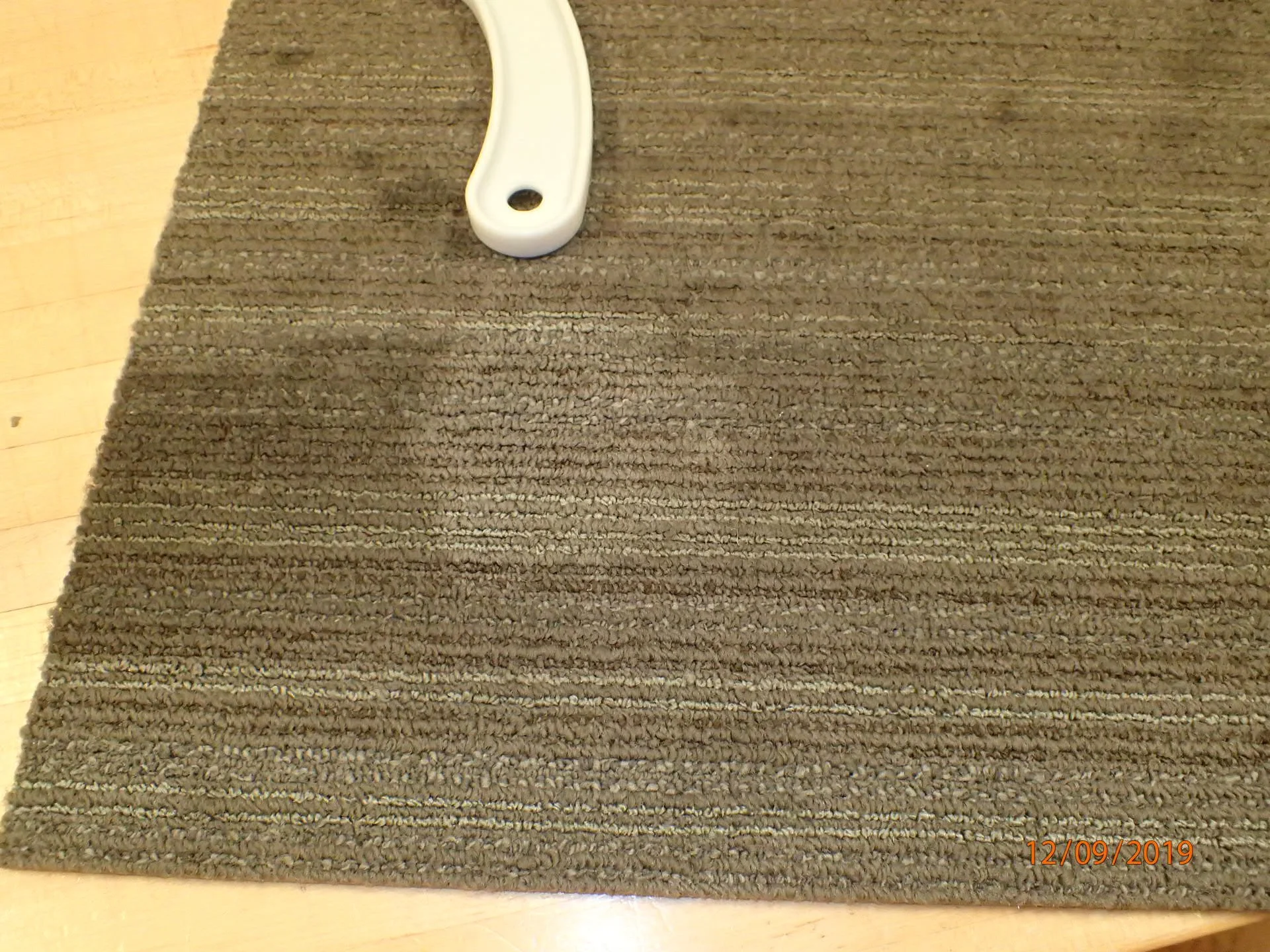
This indicates to me that the spots could be removed completely without any super special cleaning procedure, and the spots did not wick back. Plus….any detergent residue left in the carpet after the spots were removed did not attract soil, which is great news.
One of the questions I was asked to answer, is the carpet defective? Based on my field and in-office testing, the answer was no. The next question I was asked to answer was if the procedures and/or chemicals the cleaning company was using were ineffective. Fortunately for the client, but maybe not for the cleaning company, testing found the procedures and products the cleaning company was using were not as effective as they should be. If the cleaning company is willing to use different spot removal products and modify their spot removal procedures, the client will then be satisfied.
Obviously there is an article full of information that could be shared regarding maintaining the appearance of carpet. In the example I shared above, it was not a carpet issue, it was a maintenance issue. Who is taking care of your carpet? Have they been trained properly? How often and how diligently are they performing the service? Are they using appropriate detergents and procedures to perform the task?
TENACIOUS FILMS ON FLOORING
I recently inspected floors in several new and existing homes, one was a wood floor, one was luxury vinyl plank, and another laminate. Each consumer was frustrated that they could not get their floor clean, “it always has a dirty, smudged, blotchy appearance” they said. They said they have cleaned it over and over using the manufacturer’s cleaning agent and other cleaning products with no success. In each case I found an unknown, tenaciously bonded residue on the floor that prevented the consumer from using quality, manufacturer approved products to maintain the floor. In this inspector’s opinion, the “unknown” residue could more than likely be found in one of the myriad, smell good, “make it shiny” floor cleaners on the shelves in your favorite lots or mart store.
SMUDGED SOLID WOOD
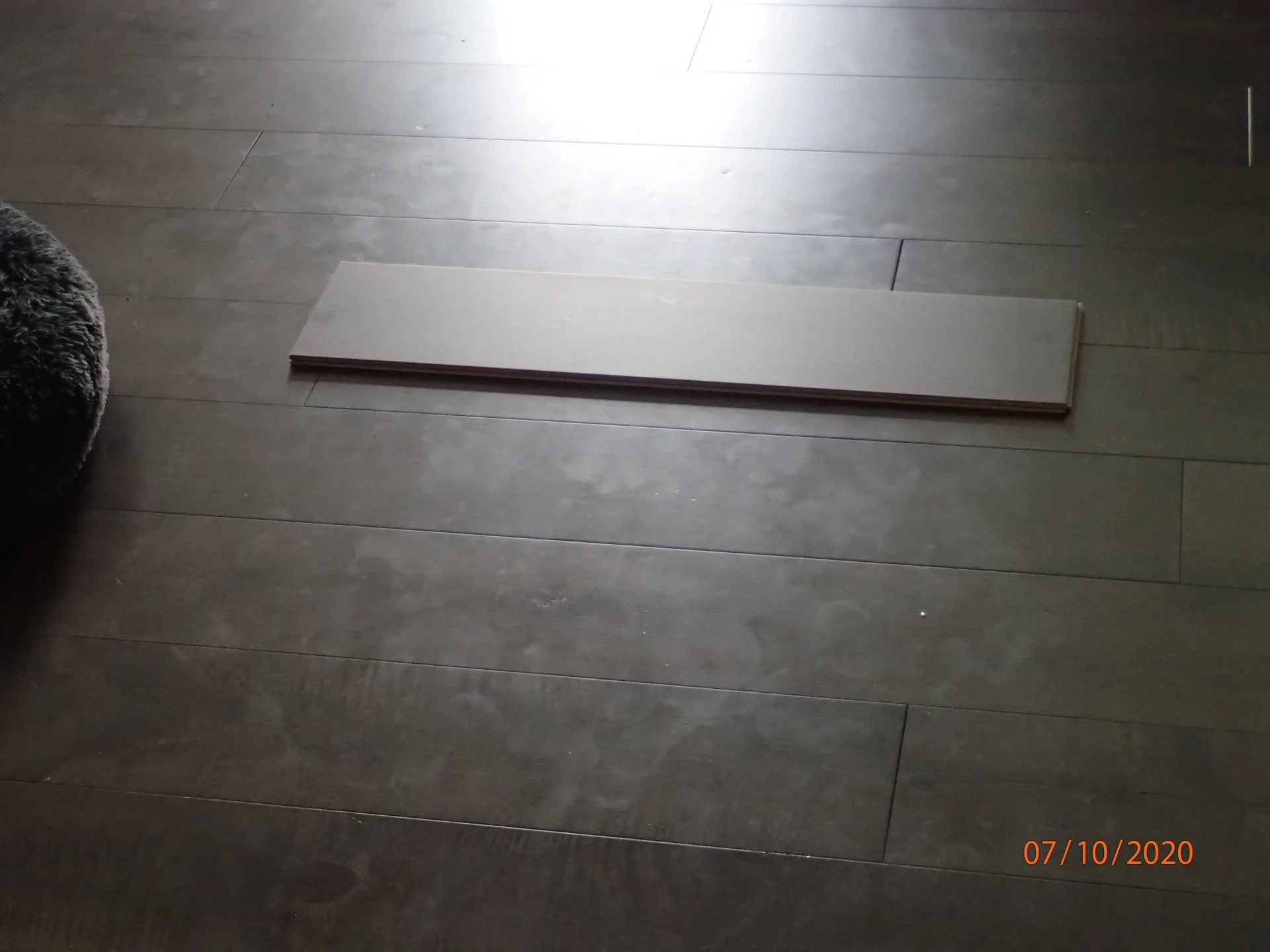
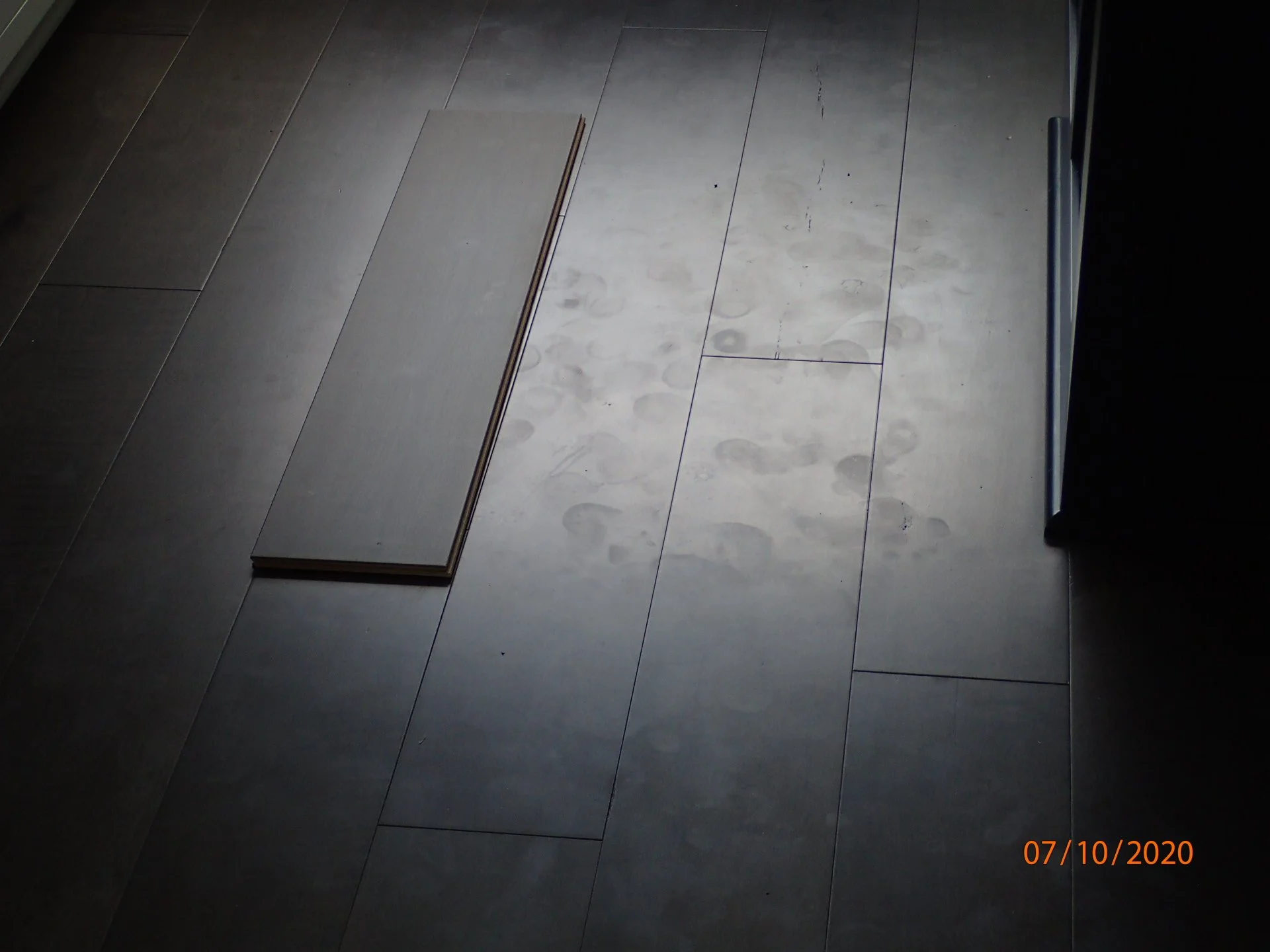
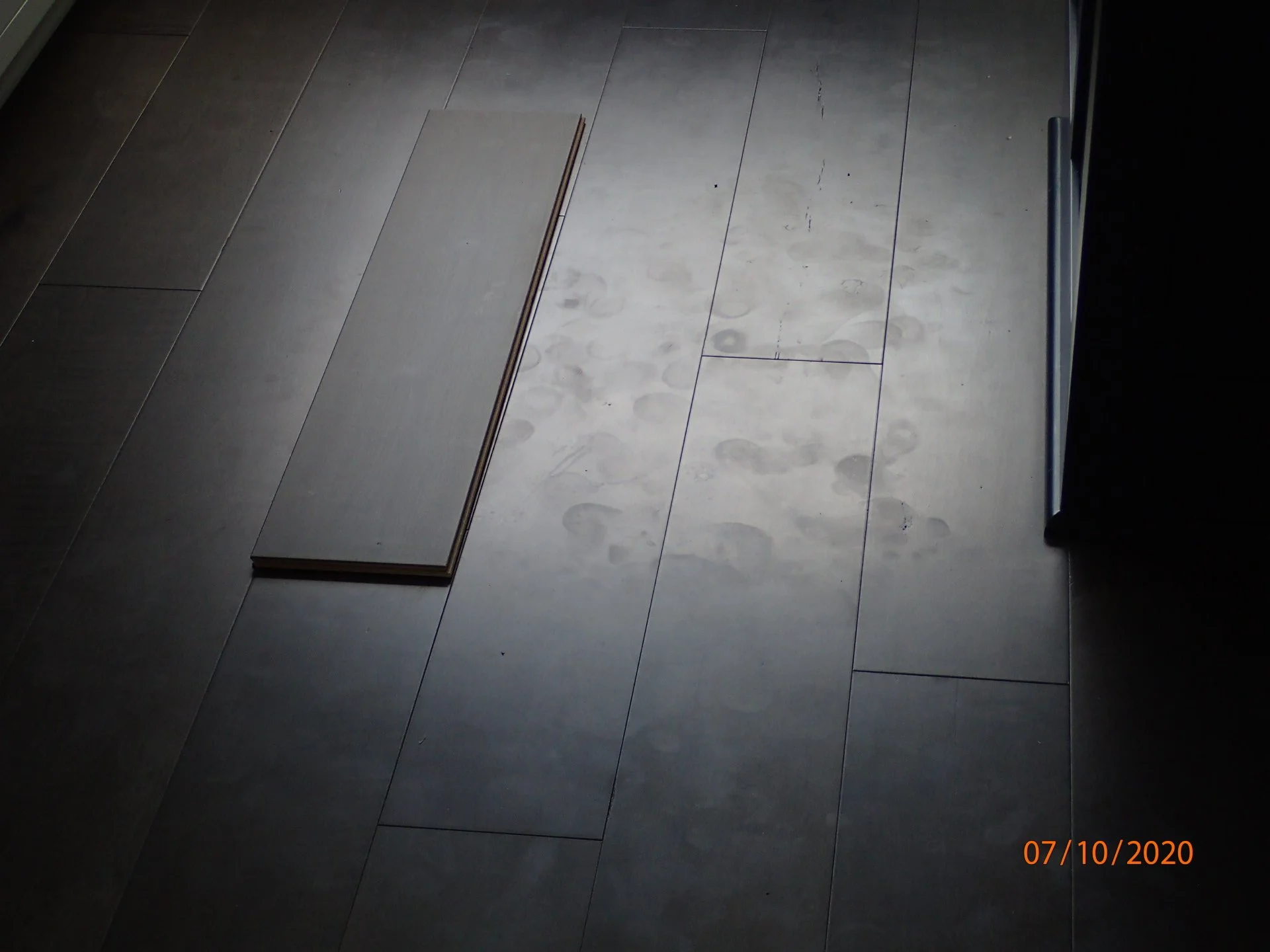
This consumer had approximately 1,700 square feet of a gray in color, solid hardwood plank floor installed throughout the home. Her frustration in maintaining the floor started less than one month after moving into this new home. She showed me around the home pointing out how dirty and smudged the floor was. I asked about the cleaners she had been using and she brought out the bottle of Bona and the spray bottle of the manufacturer’s cleaner. She also showed me the microfiber cloths she uses to clean the floor. She said no matter what cleaner she used the floor it looked okay, but you could still see smudge marks on the floor. She demonstrated cleaning the floor for me and her concerns were easily visible. Everything she showed me and demonstrated should have been able to clean the floor. I then examined an uninstalled plank which had no smudge marks on it and used it for comparison. I was wondering to myself as to how did this floor get from pristine and no smudge marks to looking like this?
I performed my own test by misting the manufacturer’s cleaning agent onto the floor, wiping with paper towels to clean, then drying the area with paper towels. Observation continued to reveal smudge marks on the floor and that was after cleaning the same area two times.
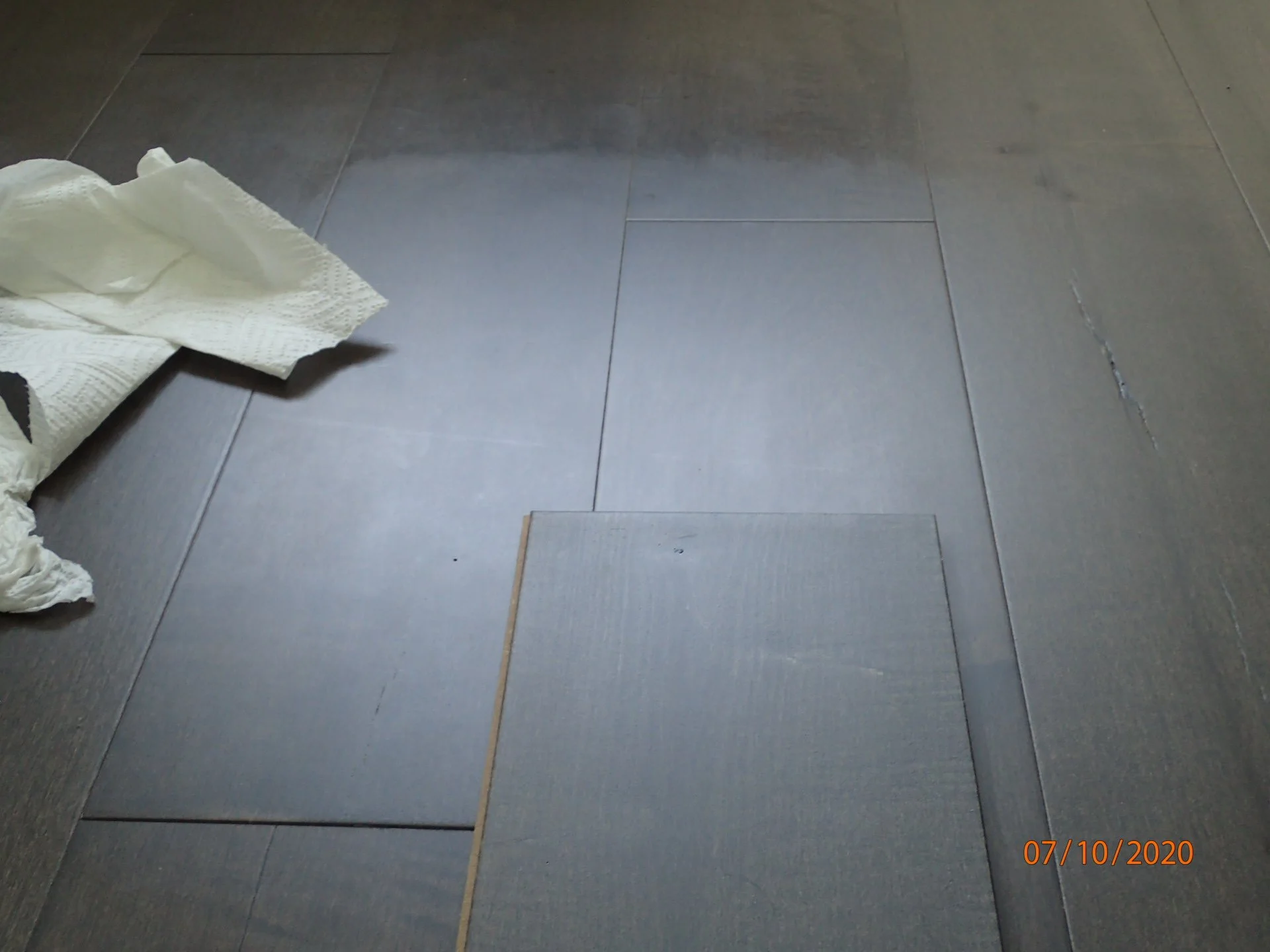
I then test cleaned the floor using a commercially available All-Purpose Neutral Cleaner. This test consisted of applying the product to a paper towel, wiping the floor to clean it, then wiping the floor dry with paper towels. With one cleaning it improved the appearance to near 100% but some smudge marks could still be seen.
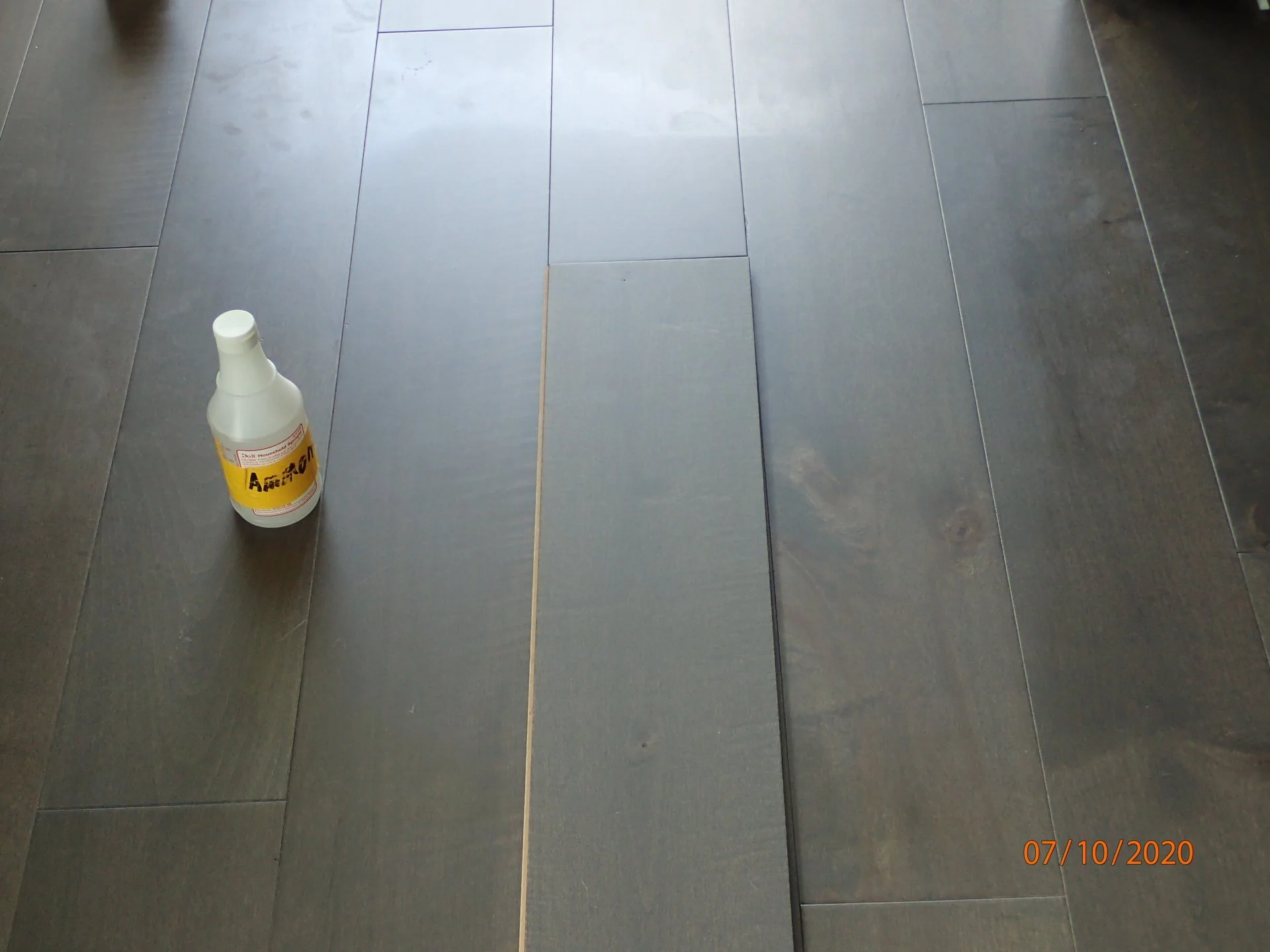
A third area was test cleaned following the same procedures except I used diluted clear ammonia. With one cleaning it removed ALL the smudge marks restoring the appearance of the floor to 100% and restoring the appearance of the floor to that of the uninstalled plank.
SMUDGED LUXURY VINYL PLANK
This consumer had approximately 1,100 square feet of luxury vinyl plank floor, installed in nearly all the common areas of the home. Her frustration in maintaining the floor started less than one month after moving into this new home. She said she had the same floor in her previous home and loved it so much she wanted it in this new home. She showed me around the concern areas pointing out how dirty and smudged the floor was. I asked about the cleaners she had been using and she brought out the spray bottle of the manufacturer’s cleaner. She also showed me the microfiber cloths she uses to clean the floor. She said she was afraid to use anything other than the manufacturer’s specified cleaner in fears of damaging the wear layer and voiding the warranty. She said that no matter how often she cleaned the floor it would still look dirty and smudged. Examination of an uninstalled plank revealed no smudge marks on it and was used for comparison.
I performed my own test by misting the manufacturer’s cleaning agent onto the floor, wiping with paper towels to clean, then drying the area with paper towels. Observation continued to reveal smudge marks on the floor after cleaning the same area two times. I then test cleaned the floor using diluted clear ammonia. With one cleaning it removed ALL the smudge marks restoring the appearance of the floor to 100% and restoring the appearance of the floor to that of the uninstalled plank.
FRUSTRATION ABOUNDS
Although my testing was able to successfully remove the tenacious, dulling film these consumers had on their floors, both of them were beside themselves and convinced there was something wrong with the finish on the floor. Within minutes I was able to prove that thinking to be wrong. The consumer’s anger and frustration however was very real and their anger quickly turned toward the builder (different builder for each of these homes) who was in fact the last person to touch the floor before they moved in. What did the builder’s cleaning people use to cause such a thing and why have they not been trained to use appropriate cleaners and use them properly to clean such expensive floors? I know, a rhetorical question.
DIRTY LAMINATE
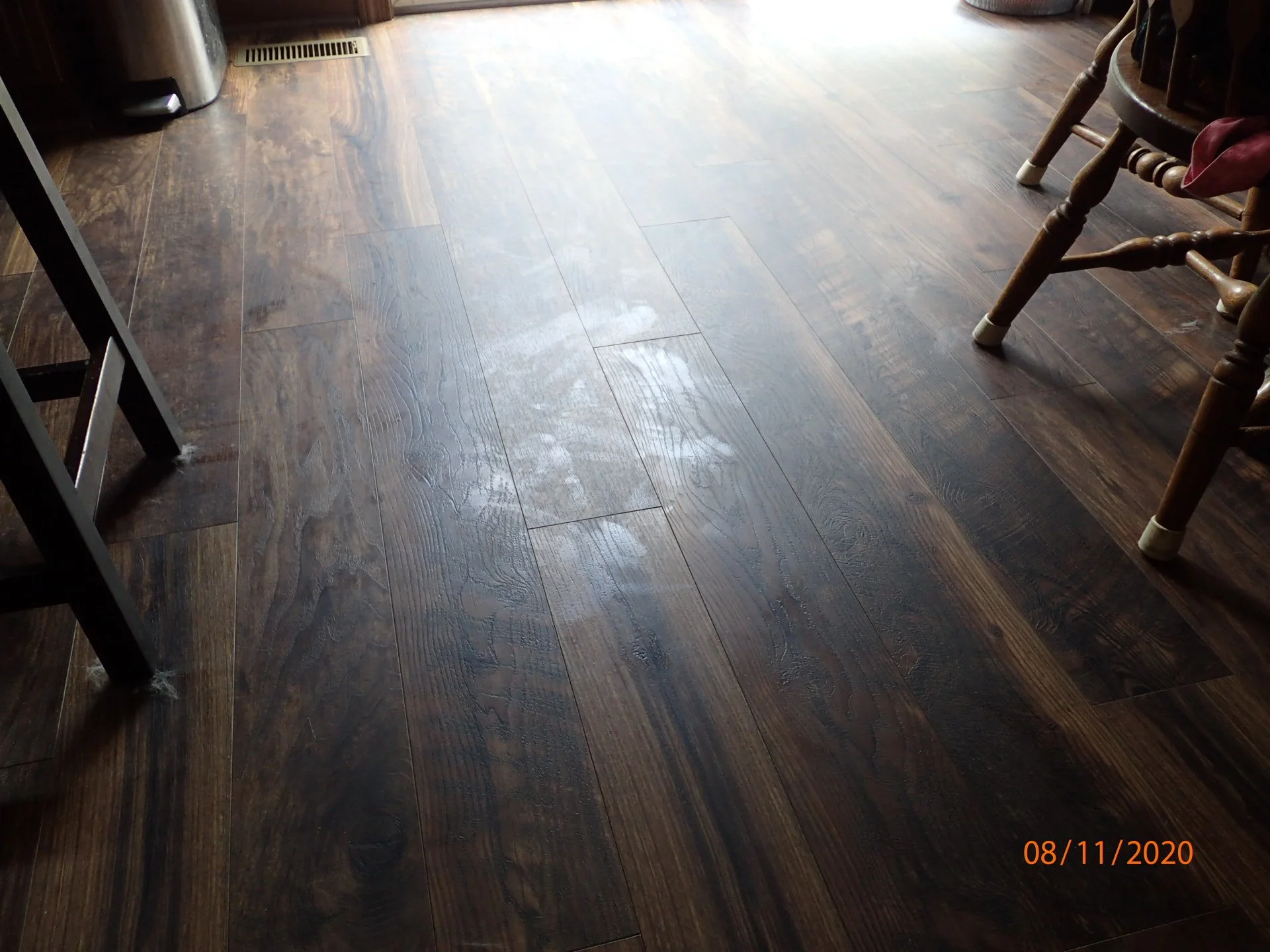
Here is a case where the consumer said she uses only water to clean the floor, because “all those cleaners leave it streaky.” I asked how often do you clean the floor? “Once a week” she replied. “How many microfiber pads do you use?” She said “just one, I rinse it out and keep using it”. In this home lived two adults, two children, 4 large dogs, and two cats. This inspector thinks the floor needed cleaned a few more times than just one time per week, but even if it had been cleaned more often, it probably would not have looked any better, especially if she was using only water.
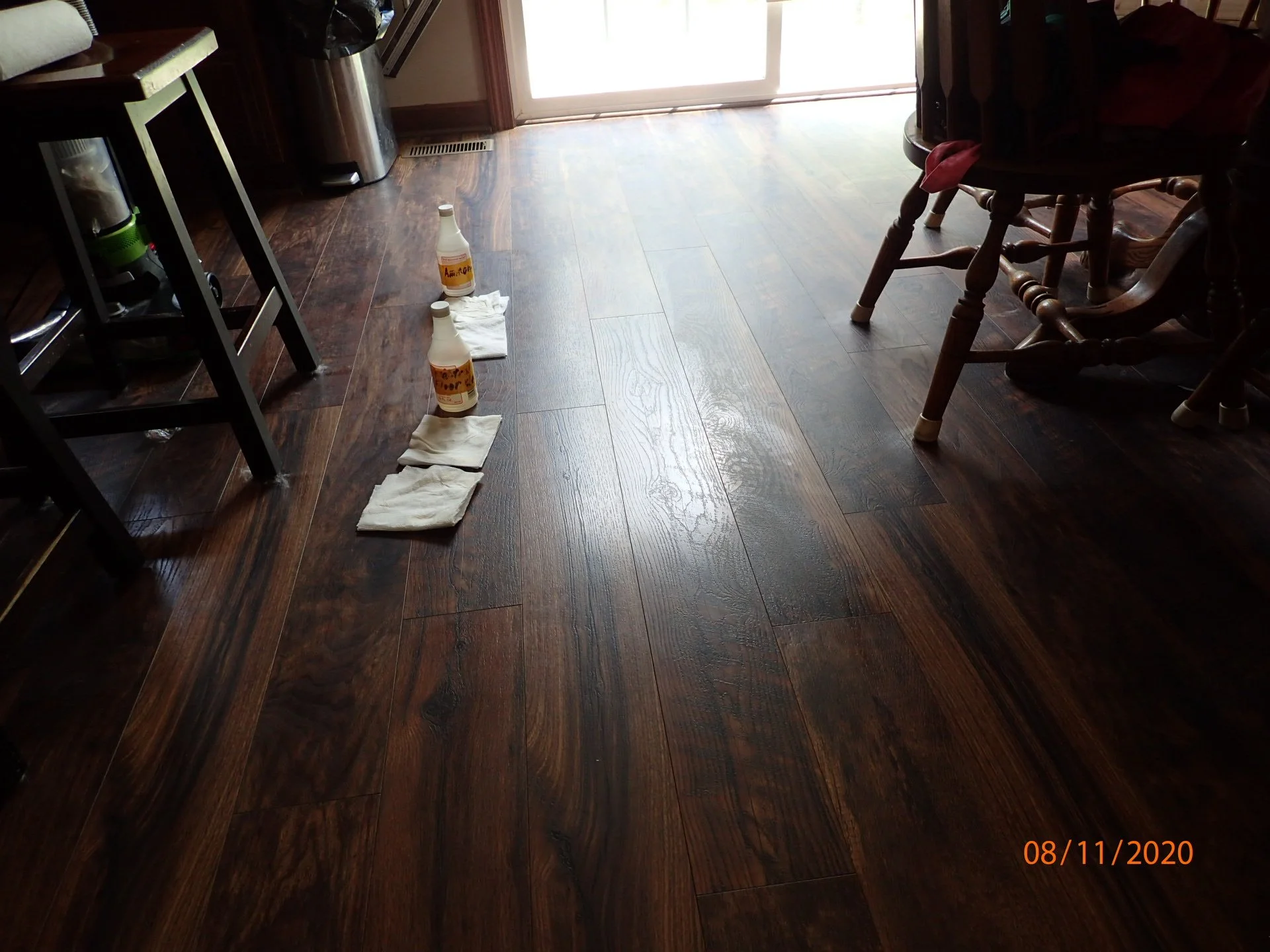
I test cleaned the floor using a commercially available All-Purpose Neutral Cleaner. This testing consisted of applying the product to a paper towel, wiping the floor to clean it, then drying the area with paper towels. With one cleaning it restored the appearance of the floor to 100%. I then tested following the same procedure used diluted clear ammonia. Once again, with just one cleaning it too restored the appearance of the floor to 100%.
THE BOTTOM LINE
Nearly every carpet and flooring manufacturer makes spot removers and cleaners for their products or they will recommend specific products that they approve to be used. Some may say to use Carpet and Rug Institute (CRI) Seal of Approval products https://carpet-rug.org/testing/seal-of-approval-program/certified-cleaning-solutions/
On this site you will find numerous approved spot removers and cleaners.
Most of the cleaners flooring manufacturers make are formulated to “maintain floors”, not restore them, they are not robust enough or meant to be. I had to use diluted, clear ammonia, which is very powerful and safe to use on floors like this, when used properly. Clear ammonia is also a common, and easily found cleaner at one of those same lots or mart stores or laundry aisle in the grocery store. The consumers were happy that the film could be removed relatively easily, and once the film was removed they can switch to using the manufacturer’s approved cleaner to maintain the floor.
The main goal of cleaning a floor is to leave it without a soil attracting residue. These inappropriate cleaners work but can leave a residue behind that can make subsequent cleanings occur more often. The rub, is that all it may take is cleaning the floor just one time with one of these inappropriate cleaners and that is when the frustration begins because of the soil attracting, tenacious film that is left behind. The caveat here is for a consumer, a professional cleaner, a house cleaning service, a whomever….to use professionally formulated products on carpet and floors to clean them and maintain them, and…..use them correctly. When all those factors align, success happens and frustrations cease.